
plc programming AND Automation /
Efficient, reliable operations through expert PLC programming and automation that optimise processes, minimise downtime, and maximise system performance.
industrial pLC PROGRAMMING SERVICES /
Many industrial operations still rely on ageing PLC systems. While the hardware may remain reliable, outdated control logic can reduce efficiency, increase downtime, and make faults harder to diagnose. If that sounds familiar, it may be time to review your control system.
At Tier16 we provide tailored PLC programming solutions for industrial automation and control systems. Services include control logic development, system integration, commissioning, troubleshooting, upgrades, and performance optimisation to improve efficiency, reliability, and overall system performance. From standalone PLCs and HMIs to complex automated control systems and communication networks, complete solutions are designed and implemented to meet a wide range of operational requirements.
Is your legacy PLC nearing the end of the operational lifecycle? Rate your current state HERE.
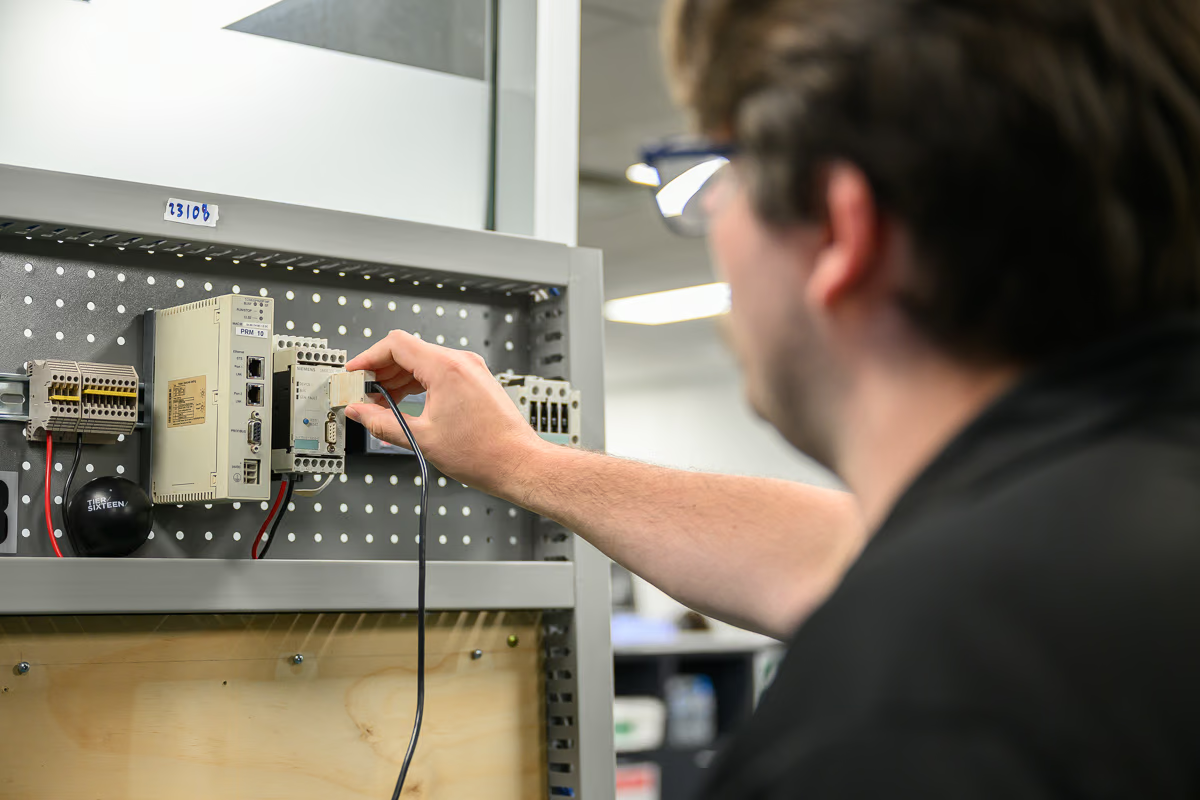
PLC programming & control systems /
Reliable PLC programming is the foundation of efficient industrial automation. Whether you’re upgrading existing equipment or resolving ongoing control issues, well-structured PLC software can improve performance, reduce downtime, and simplify maintenance.
- Ladder Logic Programming
- PLC Software Development
- Machine Control Logic
- PLC Troubleshooting
- System Optimisation
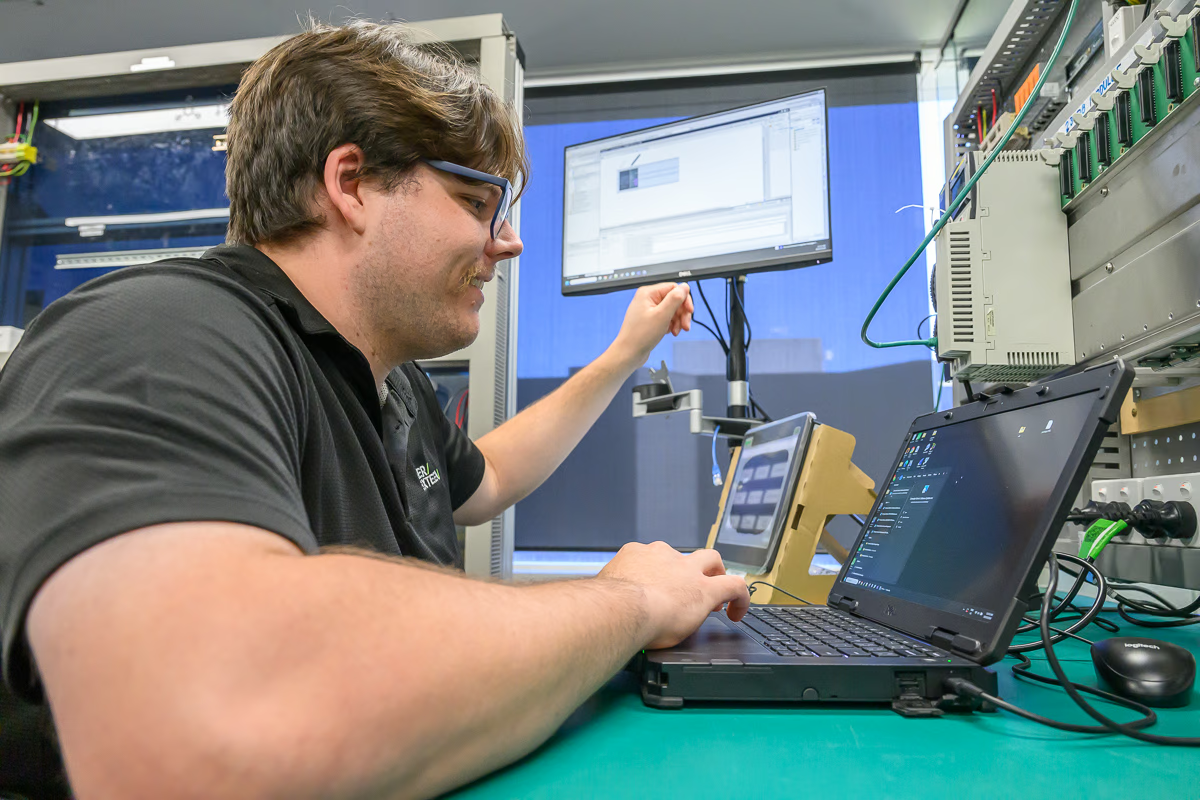
scada & hmi development /
If your current interface is difficult to navigate, lacks meaningful real-time data, or doesn’t provide clear alarms and system insights, it may be limiting productivity. Modern SCADA and HMI development focuses on intuitive visualisation, reliable data collection, and seamless integration with your control systems.
- SCADA System Design
- HMI Touchscreen Development
- Real-Time Monitoring
- Alarm & Reporting Systems
- Operator Interface Design
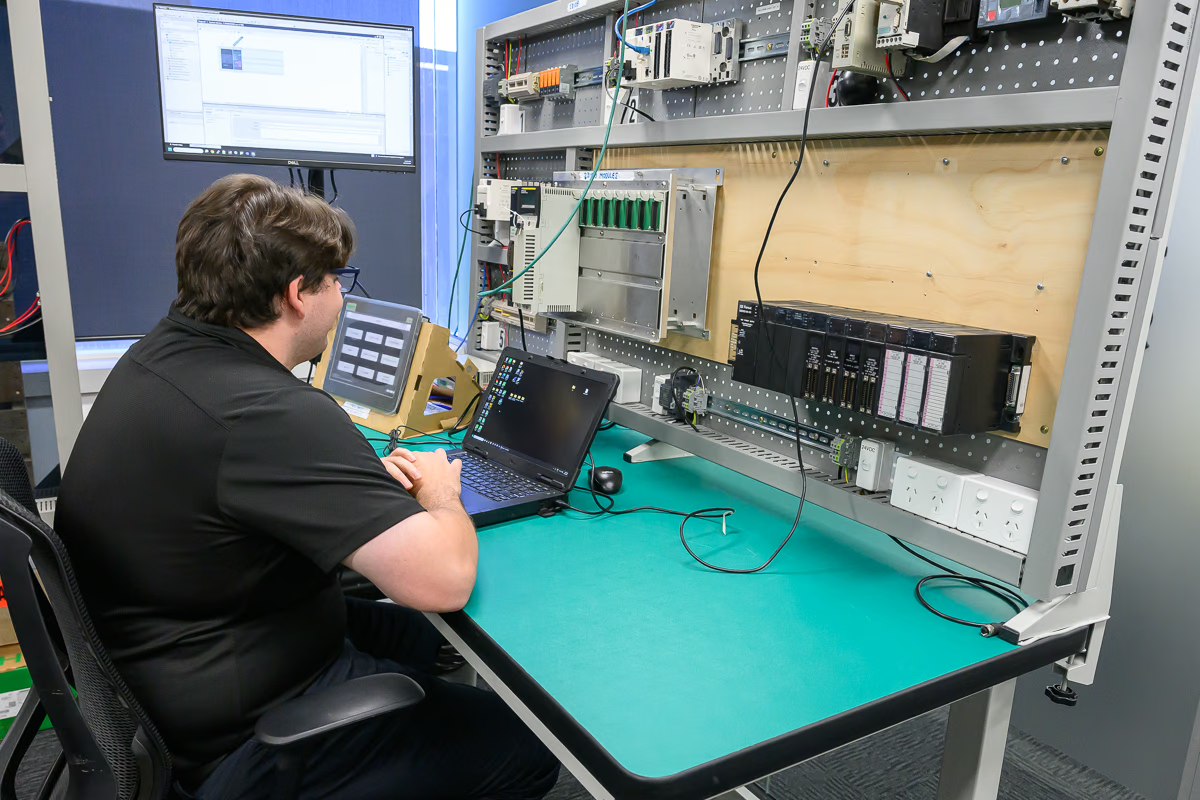
industrial automation & system integration /
End-to-end automation and control systems integration for large-scale mining, energy, defence, and critical infrastructure projects, delivering the design, implementation, optimisation, and lifecycle support.
- PLC, SCADA & DCS Integration
- Industrial Network & OT Integration
- Functional Safety & Cybersecurity
- Mining, Energy & Defence Automation Systems
PROGRAMMABLE LOGIC CONTROLER benefits/
A Programmable Logic Controller (PLC) improves industrial automation by providing reliable, fast, and precise control of machinery and processes, even in harsh operating environments. It also increases efficiency and flexibility by allowing easy reprogramming and troubleshooting without major hardware changes, reducing downtime and maintenance costs.

Increased Productivity/
PLC programming automates repetitive and complex industrial processes to reduce manual intervention, improve cycle times, and ensure smoother, more efficient operations that consistently maximise overall production output.

Reliability & consistency /
The PLC delivers precise and stable control of processes, ensuring consistent system behaviour, reduced variability, and dependable long-term performance in demanding industrial environments. Connected to a PC, it also enables convenient programming, real-time monitoring, data logging, and system diagnostics.

Reduced Downtime/
Real-time control logic and diagnostics to quickly detect faults and system issues, allowing faster troubleshooting, quicker recovery, and minimal disruption to ongoing operations.
PLC Programming - faq/
What is a PLC and how does it work?
A Programmable Logic Controller (PLC) is an industrial computer used to control machines and processes automatically. It works by continuously scanning inputs, running a programmed logic (user program), and updating outputs in a repeating cycle called the scan cycle.
What are the main components of a PLC system?
A PLC system mainly consists of a power supply, CPU (processor), input modules, output modules, and a programming device or software. It may also include communication modules for networking with other systems.
What are the different programming languages used in PLCs
The choice of language is driven by what best suits the application. Ladder logic remains the primary language for discrete control and safety interlocking. Structured text is used for complex calculations and data handling. Function block diagram and sequential function chart are used where the control problem is better represented graphically.
In practice, most sophisticated systems use a combination of languages within the same program.
Ladder Logic (LD): A graphical language that looks like electrical relay diagrams and is the most commonly used in PLC programming.
Function Block Diagram (FBD): A visual language that uses functional blocks connected together to represent control logic.
Structured Text (ST): A text-based high-level language similar to programming languages like Pascal, used for complex calculations and logic.
Instruction List (IL): A low-level text language made of simple instructions, but it is now mostly outdated and rarely used.
Sequential Function Chart (SFC): A graphical language used to control processes step-by-step in a sequence.
What does a control system audit involve?
An audit typically involves reviewing existing PLC programs against current operational requirements, identifying logic that is redundant, unclear, or potentially hazardous, and assessing how well the system communicates with connected infrastructure. The output is usually a prioritised list of recommendations rather than a mandate to replace everything.
Can existing systems be upgraded without replacing hardware?
Often, yes. In many cases, the underlying hardware is sound and the limiting factor is the program itself, or the absence of communication interfaces. Software modifications, firmware updates, and the addition of communication modules can significantly extend the useful life of older systems. A hardware replacement is warranted when the platform is genuinely end-of-life or no longer supported by the manufacturer.
How long does a typical PLC programming project take?
Scope varies considerably. A targeted troubleshooting engagement or control logic modification can be completed in a matter of days. A full control system design and commissioning for a complex automated line may take several months. The key variables are the complexity of the process being controlled, the number of I/O points, the integration requirements, and the level of documentation and testing required.
PLC COntrol systems /
Get in touch today for industrial PLC solutions and expert automation services in Perth WA.