
SCADA Programming AND automation /
Safer, smarter operations through secure, reliable, and scalable SCADA programming and automation solutions that provide real-time visibility, improve process control, and enhance operational performance.
industrial scada PROGRAMMING SERVICES /
Not all SCADA systems are created equal. Many have evolved over time through incremental additions, resulting in fragmented interfaces, inconsistent alarm handling, and complex workflows that can hinder operations rather than improve them. Effective SCADA programming takes a different approach – one that begins with understanding how operators work, the decisions they need to make, and the information required to make those decisions with confidence.
At Tier16, we design and deliver tailored SCADA solutions that provide clear visibility, reliable control, and actionable operational insights. Our systems combine real-time monitoring, data acquisition, alarm management, fault detection, historical data logging, reporting, and supervisory control to help organisations improve efficiency, reliability, operational resilience, and support OT security objectives.
Is your legacy SCADA environment ready for modernisation? Rate your current state HERE.
scada system development & integration /
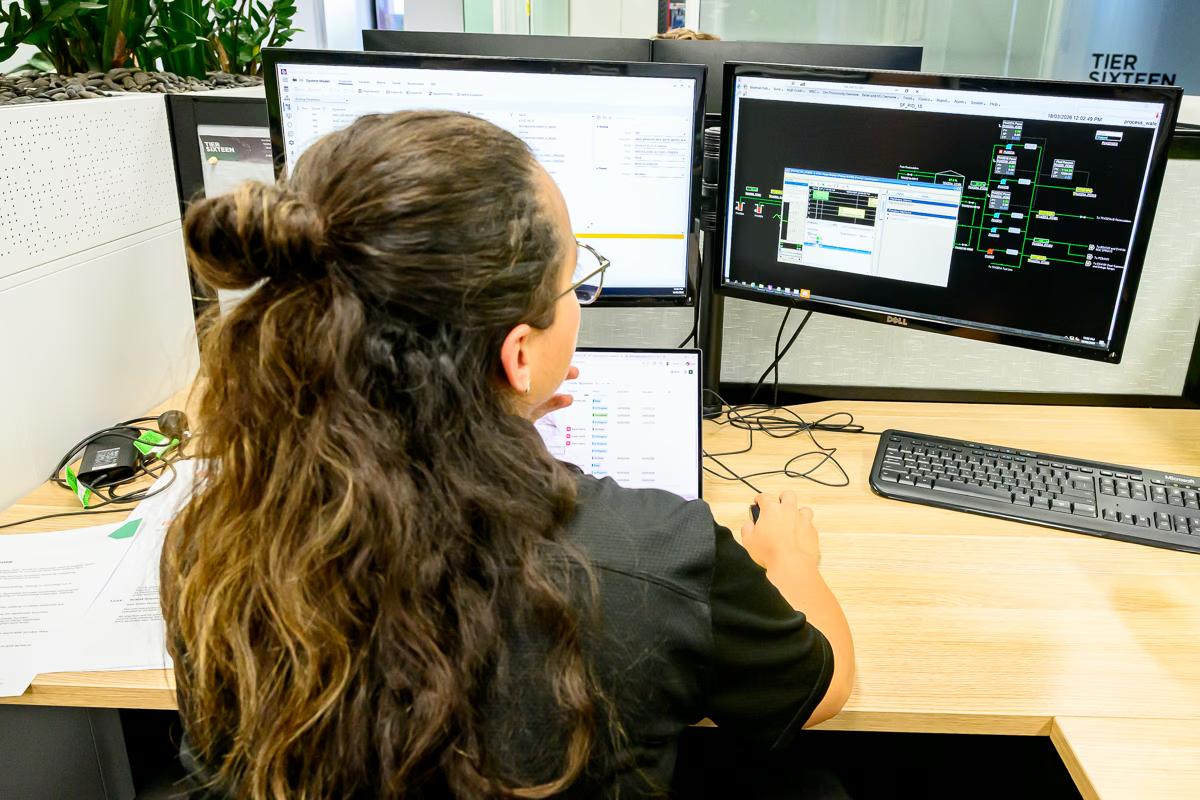
The architecture of a SCADA system matters more than most clients expect. Decisions made early, about how data flows, how PLCs communicate, which protocols are used, determine whether the system is maintainable and scalable five years from now, or whether it becomes a legacy headache. Our system development work covers the full stack.
- SCADA Architecture Design
- PLC to SCADA Integration
- Industrial Communication Protocols
- Real-Time Data Monitoring
- Alarm & Event Management
hmi design & operator interfaces /
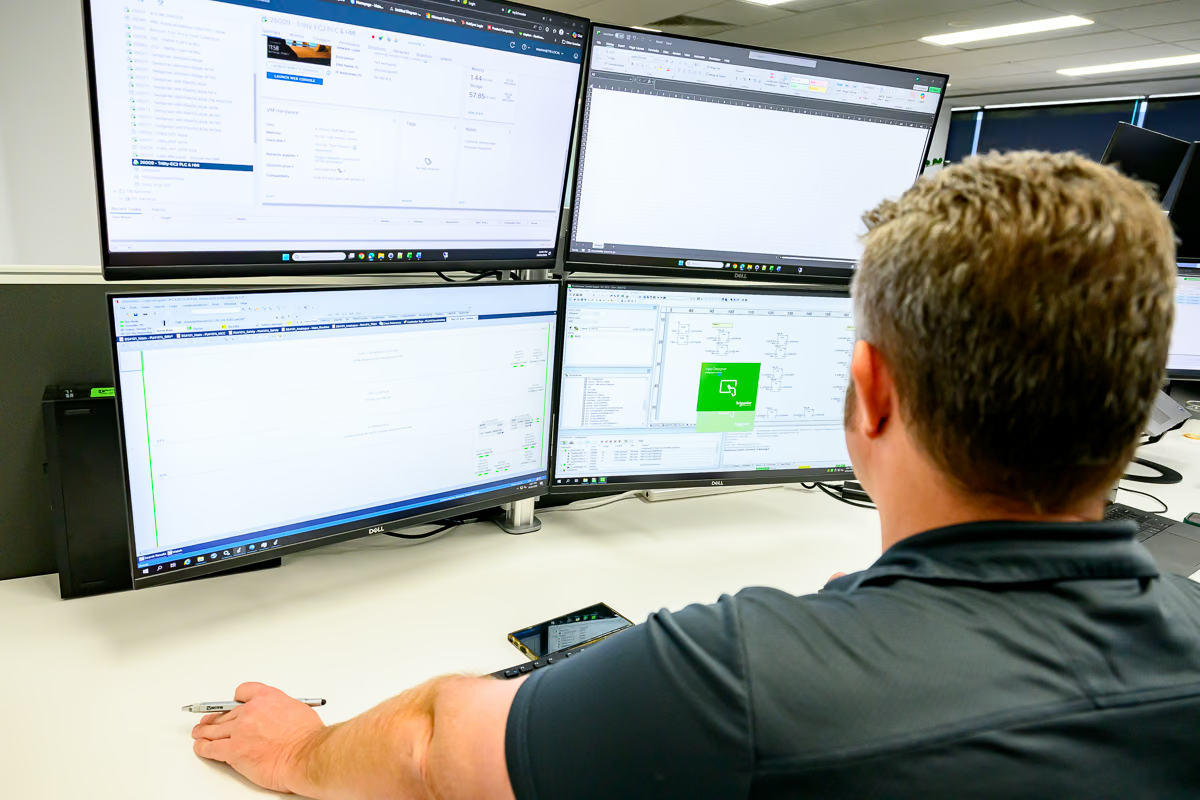
An HMI that operators find confusing or cluttered is not just an inconvenience – it is a safety risk. If the interface does not match how people think about the process, they will either miss critical information or develop workarounds that undermine the value of the system. Our modern HMI systems are designed for intuitive process visualisation, machine control, and operational efficiency.
- Touchscreen HMI Development
- Process Visualisation
- Dashboard Design
- Operator Control Panels
- Multi-Device Accessibility

industrial automation & data connectivity /
Modern operations rarely run on a single technology. Your site may have equipment from multiple vendors, running across different network segments, with some assets connected and some not. The goal is a unified SCADA environment where data flows cleanly from field devices to operator interfaces to reporting systems – without manual export steps or data silos.
- Industrial IoT Integration
- Sensor & Device Connectivity
- Remote Monitoring Systems
- Data Logging & Reporting
- Cloud-Based Monitoring
SCADA ProgramMing Benefits/
SCADA improves real-time visibility and process control, helping operators identify faults sooner, improve operational efficiency, reduce downtime, and enhance safety through automated monitoring and alarms. When engineered using secure-by-design principles, modern SCADA systems also strengthen the resilience and security of industrial operations.
Real time monitoring /
SCADA systems provide continuous 24/7 real-time monitoring of industrial equipment, machinery, and processes from a central control location. Operators can instantly view live production data, equipment status, pressures, temperatures, flow rates, and system performance across an entire facility or multiple remote sites. This allows faster response times to operational issues, improved plant visibility, and increased process reliability.
Alarm Management & Fault Detection /
This is often the benefit with the clearest financial case. A well-configured alarm system means maintenance teams are alerted before a fault becomes a failure — reducing unplanned downtime, preventing equipment damage, and improving workplace safety. The caveat is that alarm management done poorly produces the opposite result: alarm floods that operators learn to ignore. Design matters here, not just functionality.
Data Collection & Reporting /
SCADA systems continuously collect and store operational and historical process data from PLCs, RTUs, sensors, and field devices. This information can be analysed to identify trends, improve production efficiency, monitor asset performance, and support preventative maintenance strategies. Automated reporting and data exporting functions also assist with compliance reporting, production tracking, and critical business decision-making.
SCADA Systems - faq/
What is SCADA?
SCADA (Supervisory Control and Data Acquisition) is a combination of software and hardware that connects to your industrial equipment and gives you a centralised, real-time view of what is happening across your entire operation. It talks to PLCs, RTUs, sensors, drives, valves, and pumps; collects data from all of them; and presents it through operator interfaces that make sense of the whole system at once.
Think of it this way: a PLC handles the logic for one machine or process loop. SCADA sits above that layer. It is the system that lets a single operator see what every PLC, every sensor, and every remote site is doing, simultaneously, and take action without physically walking the plant.
A well-implemented SCADA system typically gives you:
- Live production data, equipment status, and process parameters visible from a single interface
- Configurable alarms that alert operators the moment something moves outside acceptable limits
- Historical data logging and trend analysis to support maintenance decisions and compliance reporting
- Remote monitoring and control across multiple sites from a central location
- Integration with enterprise systems, databases, and cloud platforms
Which SCADA Platform Is Right for Your Application?
Platform selection is a decision worth thinking through carefully, because migrating off a SCADA platform later is expensive. The right choice depends on your industry, your existing infrastructure, the scale of your operation, and how you expect the system to grow.
Tier16 implements and supports several leading platforms:
Ignition by Inductive Automation – our flagship platform. As an Inductive Automation Gold Integrator, this is where our deepest capability sits. Ignition is web-based, highly scalable, and uses an unlimited licensing model that removes per-client and per-tag costs. Well suited to complex, multi-site, or greenfield applications.
Aveva Plant SCADA – strong in utilities and infrastructure applications, with a proven track record in water and energy sectors.
Schneider GEO SCADA – particularly suited to geographically distributed operations such as pipelines, substations, and remote assets.
Honeywell Experion PKS – an established platform for process industries including oil and gas, refining, and large-scale manufacturing.
SCADA Systems Integration - How Does it Work?
SCADA system integration is the process of connecting and coordinating industrial equipment, control systems, software, and communication networks into one centralised automation system. This allows operators to monitor, control, and analyse all plant or facility operations from a single interface in real time.
A SCADA integration system typically connects PLCs, RTUs, HMIs, sensors, drives, instrumentation, and third-party equipment so they can communicate efficiently across the entire operation. Integration may also include linking SCADA systems with databases, reporting software, cloud platforms, remote monitoring systems, and enterprise business systems.
The goal of SCADA system integration is to improve operational visibility, automation, efficiency, reliability, and data management while reducing downtime and manual processes across industrial facilities.
SCADA system integration /
Are you looking for reliable industrial SCADA system integration solutions in Perth?